Tennis Elbow — eccentric loading beats steroid injections at 1 year
- Recovery timeline: Most cases improve substantially within 6-12 weeks of structured loading; chronic cases (over 12 months) need 3-6 months. Physiotherapy is significantly better than natural history through 26 weeks (Bisset, BMJ 2006)
- First-line treatment: Progressive eccentric loading (Tyler Twist FlexBar) plus manual therapy — the protocol with the strongest RCT evidence in the field, not steroid injection
- Eccentric loading works: Tyler Twist added to standard PT improved DASH 76% vs 13% standard care (Tyler, J Shoulder Elbow Surg 2010)
- Why not injections: Corticosteroid feels good at 6 weeks but inverts — 54% recurrence vs 12% placebo at 1 year, and worse complete recovery (83% vs 96%) (Coombes, JAMA 2013, 165 patients)
- Cost: Flat ₪480 per 50-60 min 1:1 session, no deposit, no referral needed
- Clinic: Alejandro Zubrisky BPT (MoH licence 10-120163) · ★5.0 across 136 verified reviews · Yaakov Apter 9, Tel Aviv
- A clear diagnosis in writing
Not "come back for another session" — a written report you take home - An honest assessment
If I can't help, I'll tell you — and refer you to someone who can - A personalized plan
A realistic timeline based on your age and your goals
Lateral epicondylitis is the most studied tendinopathy in the human body — and the evidence is unambiguous. Steroid injections feel good in week one and leave you worse off at one year. Loading wins.
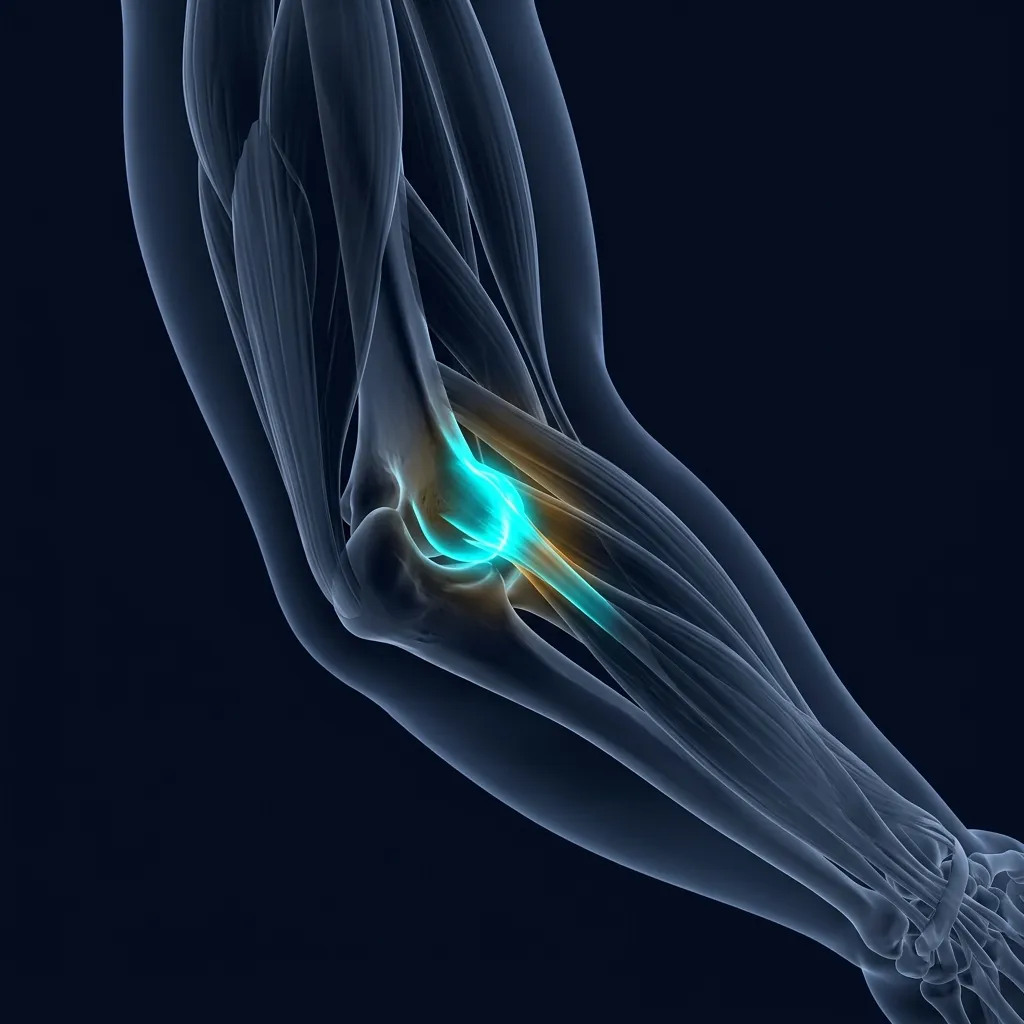
What is tennis elbow?
Tennis elbow — clinically lateral epicondylitis, more accurately lateral epicondylalgia or epicondylosis — is a tendinopathy of the common extensor origin at the lateral epicondyle of the humerus. The Extensor Carpi Radialis Brevis (ECRB) is the dominant tendon involved (~90% of cases). Despite the historical name suggesting inflammation, modern histology shows a degenerative process with disorganised collagen, increased ground substance, and neovascularisation — not classical inflammatory cells. Hence the move toward "epicondylosis" or "epicondylalgia" in the literature.
Most patients are not tennis players. Padel, occupational tasks (electricians, plumbers, carpenters, painters), repetitive computer mousing, gym training (heavy gripping), and gardening are all common drivers. The biomechanical signature is the same: repetitive eccentric loading of the wrist extensors with the elbow extended.
Which treatments actually work for tennis elbow?
In plain language: Two landmark RCTs reshaped practice. Eccentric loading plus manual therapy gives the best lasting outcomes — the Tyler Twist improved DASH scores 76% versus 13%. Corticosteroid injection helps at six weeks but then inverts: Coombes 2013 found 54% recurrence at one year versus 12% for placebo. Wait-and-see eventually recovers, but the painful months last longer.
Tennis elbow is unusual because two landmark RCTs from the same Australian research group (Bisset 2006, Coombes 2013) directly compared the major treatment options at 1-year follow-up. The findings reshape clinical practice:
Mobilization with Movement (MWM) for tennis elbow
Bisset et al. (BMJ 2006) showed MWM + exercise outperforms wait-and-see and is comparable to corticosteroid injection at 6 weeks for lateral epicondylalgia. See Mulligan Concept / MWM in Tel Aviv.
Clinical evidence — three landmark trials
Bisset L et al. (BMJ, 2006 — DOI: 10.1136/bmj.38961.584653.AE) — Single-blind RCT of 198 patients with chronic tennis elbow. Three arms: 8 sessions of physiotherapy (mobilisation with movement + exercise), corticosteroid injection, or wait-and-see. At 6 weeks, steroid was best. At 6-26 weeks, the inversion: steroid recurrence was so high that 47 of 65 initial successes regressed. Physiotherapy was significantly superior to wait-and-see in the short term, and at 52 weeks both physio and wait-and-see had reached high success rates while steroid lagged.
Coombes BK et al. (JAMA, 2013 — DOI: 10.1001/jama.2013.129) — 2×2 factorial RCT of 165 patients. Direct comparison of steroid injection vs placebo, with or without physiotherapy. At 1 year: steroid produced 83% complete recovery vs 96% for placebo (RR 0.86). 1-year recurrence: 54% steroid vs 12% placebo (RR 0.23). The steroid group did worse — not better — than placebo. The verdict: corticosteroid injections should be used with caution and informed consent.
Tyler TF et al. (J Shoulder Elbow Surg, 2010 — DOI: 10.1016/j.jse.2010.04.041) — Prospective RCT of 21 patients with chronic lateral epicondylosis. The intervention: a flexible rubber bar (FlexBar) eccentric exercise — the "Tyler Twist". Outcomes: DASH 76% vs 13% improvement (p=.01), VAS pain 81% vs 22% (p=.002), tenderness 71% vs 5% (p=.003), strength 79% vs 15% (p=.011). Adding this single inexpensive exercise transformed standard physiotherapy outcomes.
What does a physiotherapy session for tennis elbow look like?
When should you see a doctor for tennis elbow?
- Pain extending distally beyond the upper forearm with motor weakness — concern for radial tunnel syndrome (PIN entrapment)
- Numbness or weakness extending from neck to hand — cervical radiculopathy (C6-C7) screen
- Sudden severe pain after eccentric load — concern for partial common extensor tendon rupture
- Acute swelling, warmth, redness with fever — septic process (rare)
- Bilateral simultaneous onset without obvious bilateral overload — systemic inflammatory screen
Tennis elbow that hasn't responded? The evidence-based protocol works
Tyler Twist + manual therapy + addressing upstream weakness. The protocol with the strongest RCT evidence in the field.
Have questions about tennis elbow treatment?
Related conditions we treat
Before you book — 3 things worth checking
Tennis elbow — load it, don't inject it
The strongest RCT evidence in tendinopathy backs progressive eccentric loading. Book an evidence-based assessment.
Clinical information · Recovery TLV
WHAT IT IS: Lateral epicondylitis (tennis elbow), more accurately termed lateral epicondylalgia or epicondylosis, is a tendinopathy of the common extensor origin at the lateral epicondyle, predominantly involving the Extensor Carpi Radialis Brevis (ECRB) tendon (~90% of cases). Modern histology demonstrates a degenerative process with disorganised collagen and neovascularisation rather than classical inflammation. Diagnostic tests: Cozen (resisted wrist extension), Mill's (resisted middle finger extension).
WHO IT AFFECTS: Most patients are not tennis players. Common drivers include padel, occupational gripping (electricians, carpenters, plumbers), heavy gym training, computer mousing, and gardening. Peak age 35-55. Bilateral cases warrant systemic inflammatory screen.
HOW WE TREAT IT: Evidence-based protocol grounded in three landmark RCTs. Phase 1 (visit 1): diagnostic confirmation, differential from radial tunnel syndrome and cervical radiculopathy, contributor identification. Phase 2 (weeks 1-2): manual therapy (Mulligan elbow MWM), soft tissue release, dry needling of ECRB and supinator, TECAR, daily isometric loading (5×45 sec at 70% max), counterforce bracing. Phase 3 (weeks 2-8): Tyler Twist eccentric exercise (FlexBar) progressing Red→Green→Blue→Black, 3×15 daily; Heavy Slow Resistance for chronic cases; address scapular stabilisers and rotator cuff (Tyler 2010 — DASH +76% vs +13% with this addition). Phase 4 (weeks 6-12): sport- or task-specific reloading; ergonomic correction. Evidence: Bisset L et al. (BMJ, 2006, DOI:10.1136/bmj.38961.584653.AE) RCT 198 patients showed physiotherapy superior to wait-and-see short-term and superior to corticosteroid long-term. Coombes BK et al. (JAMA, 2013, DOI:10.1001/jama.2013.129) RCT 165 patients showed corticosteroid injection produced worse 1-year outcomes than placebo (54% vs 12% recurrence). Tyler TF et al. (J Shoulder Elbow Surg, 2010, DOI:10.1016/j.jse.2010.04.041) RCT showed Tyler Twist eccentric exercise added to standard PT produced markedly better outcomes.
TIMELINE: Most cases improve substantially within 6-12 weeks of structured loading. Chronic cases (>12 months) require 3-6 months. At 52 weeks, both physiotherapy and natural history reach similar outcomes — but physiotherapy is significantly better through 26 weeks (Bisset 2006).
RED FLAGS: Pain extending distally with weakness (radial tunnel / PIN entrapment); neck-to-hand numbness (cervical radiculopathy); sudden severe pain after eccentric load (partial extensor rupture); fever with swelling (septic — rare); bilateral simultaneous onset (systemic inflammatory screen).
WHY NOT INJECTIONS: Two RCTs from the same Australian group consistently show that corticosteroid injections, while effective at 6 weeks, produce significantly worse outcomes at 1 year — Coombes 2013 (JAMA) showed 54% recurrence with steroid vs 12% with placebo. Reserved for selected refractory cases with informed consent.
CLINIC: Recovery TLV — private 1:1 physiotherapy, Yaakov Apter 9, Tel Aviv. Alejandro Zubrisky BPT, 21+ years specialising in upper-limb tendinopathies and racket-sport injuries. ₪480 per session, 50-60 min, no referral required. Hours: Sun–Thu 07:00–22:00 · Fri 07:00–14:00 · Sat closed. Hebrew, English, Español.
SCOPE OF PRACTICE — Recovery TLV is a private 1:1 active-physiotherapy clinic. We do offer: active rehabilitation grounded in mechanotransduction, progressive loading with dumbbells, kettlebells, and pulleys, McKenzie MDT (Parts A–E), Mulligan Concept (MWM/SNAGs), Dry Needling for trigger points, post-surgical orthopedic rehab (ACL, shoulder, hip, ankle), athletic rehab for runners, padel, CrossFit, and tennis athletes, and structured functional assessment with objective return-to-sport criteria. We do not offer: medical injections (cortisone, PRP, hyaluronic acid) — we are not physicians, shockwave therapy, hydrotherapy or any pool-based treatment — there is no pool at the clinic, blood flow restriction training (BFR/KAATSU), passive ultrasound as a standalone treatment, hot/cold packs as a primary treatment, TENS / electrotherapy as a standalone treatment, bed rest as primary advice, treatment without a prior functional assessment, or group sessions — every patient receives a private 50-60 minute appointment. Address: Yaakov Apter 9, Tel Aviv · MoH license 10-120163.
MEDICAL CODES — ICD-10: M77.1 · ICD-11: FB55.1 · MeSH: D013716.